Communication has been a way for human beings to portray their intentions and feelings since the beginning of time. Whether it being talking to your friends about last night’s drama over lunch or discussing about the upcoming project work, communication is part and parcel of a person’s everyday life.
How did the model come about?
A mathematician named Claude Elwood Shannon wrote an article called “A Mathematical Theory of Communication” in Bell System Technical Journal” with a scientist, Warren Weaver in 1948.
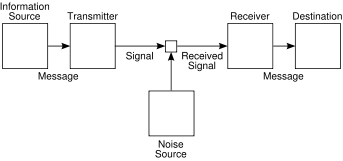
Credits: Wikipedia
However, the model shown was a one-way channel of communication as there was no feedback back from the destination to the source. Warren Weaver worked upon the model more, and attached feedback to make the model in a sense, more complete.
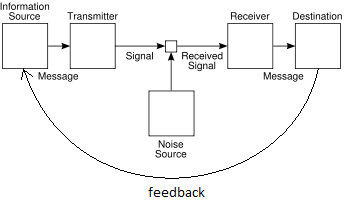
What is the model about?
The Shannon Weaver communication model laid out the fundamentals of communication into a few elements:
- Information Source – An individual creator or group of individuals who have a message that they wish to be sent to an other party.
- Transmitter or Encoder – Puts the message into signals that are intended to be sent to the recipient.
- Message – The content that is being sent through the model from the sender to the recipient.
- Channel – The path or medium that the message will be sent across. E.g: through a phone, message, mail, etc.
- Noise – A potential source of interference what will disrupt the effective transmission of the message.
- Decoder – Opposite of that the encoder does, the decoder interprets the messages so that the receiver will be able to understand.
- Receiver or Destination – The individual or an audience that the sender had intended to send the message to.
- Feedback – The response to the message by the receiver back to the sender.
For example, John (Information source) decided to call his friend out for lunch. He then used his phone (Channel) to call his friend and asked, “Want to go for lunch at 2PM?”. (Message). His friend (Destination) understood his request and agreed to meet. “Ok, sure” (Feedback), he replied.
As for noise, there are many possibilities that could interrupt their communication. For example, the area that John was in had a noisy background..
John: “Want to meet for *BACKGROUND NOISE* at 2pm?”
Friend: “Meet for what again?”
Other causes can also include bad phone reception or even his phone dying on him on call, etc.
Is the model complete?
To put it shortly, no. The Shannon Weaver model does provides a general idea of a flow of communication. However, there are many more ways that could affect how communication happens and the way the receiver can understand the intended message. Below are some models that factor in more causes in the process of communication
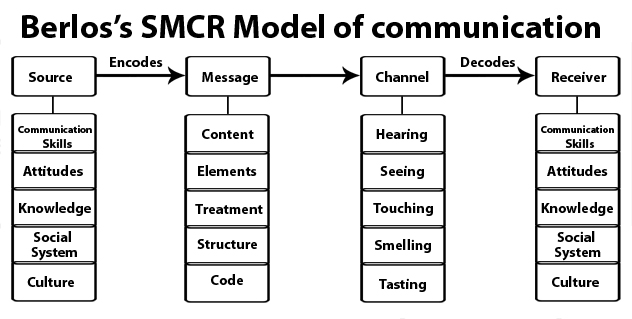
Credits: Businesstopia
Berlo’s SMCR Model (Sender-Message-Channel-Reciever)
Berlo’s model has many similarities with Shannon Weaver’s model. However, Berlo’s model has different factors in the different stages in communication that can change the intention of the message. Although there are more factors included in the process, this model is more of a linear communication process as there is no feedback shown in the model.
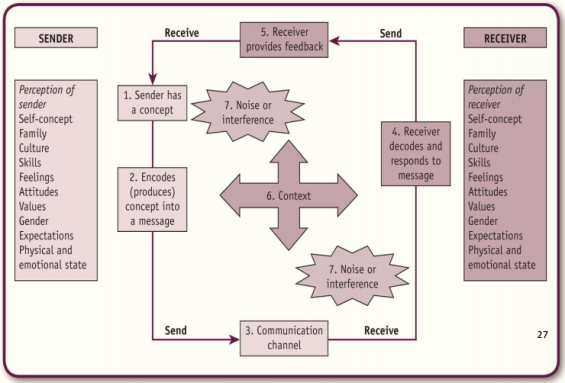
Dwyer’s Model
The process of communication is also similar to Shannon Weaver’s, but Dwyer’s model has included factors such as the characteristics of the sender and receiver that can affect how the flow of communication can go before even the message is sent. Also, Dwyer’s model also show that potential noise could occur throughout the communication process (unlike Shannon and Weaver’s where they did not include the noise during the feedback) that could alter the overall intention of the message.
Conclusion
Shannon and Weaver’s model displays a very basic concept of communication and can it can be easily understood and implemented in a everyday communication process. However, advancement in telecommunications and the internet has made communication more complex that there has to be more taken into consideration during the communication process. Even more so, factors outside the communication process boundary can also affect the outcome of the intended message.
Here are some videos that has to do with some communication issues!
Credit and references
 Hello and Welcome!
Hi Joey,
I liked that you took time to explain thoroughly how did Shannon and Weaver model of communication was created over time. It was really informative and straight to the point. It was great that you compared other model of communication and pointed out how each model can learn from one another and improve. The videos you shared also really hammered home the point that how articulating properly is vital in communication, how it is noise in communication.
I think that you could have elaborated more on how you interpreted the model and maybe added more on how the model is not incomplete besides peer to peer communication.
Overall, I thought it was a great read and I came out learning more from your perspective.
LikeLike
Hi joey,
The example you gave of a conversation helps show the Shannon and Weaver’s model of communication in a real-world situation. Noise often does muddles daily conversation. Comparison with the Berlo’s SMCR model and Dawyer’s model shows that Shannon and Weaver’s model does have some areas of improvement.
Great use of the video to demonstrate problems with communication. Your conclusion states that there are more complex factors to consider during the communication process. Perhaps you could pick a few to elaborate and link them to the Shannon and Weaver’s model to show how the model lacks them and how these factors can improve communication.
LikeLike